
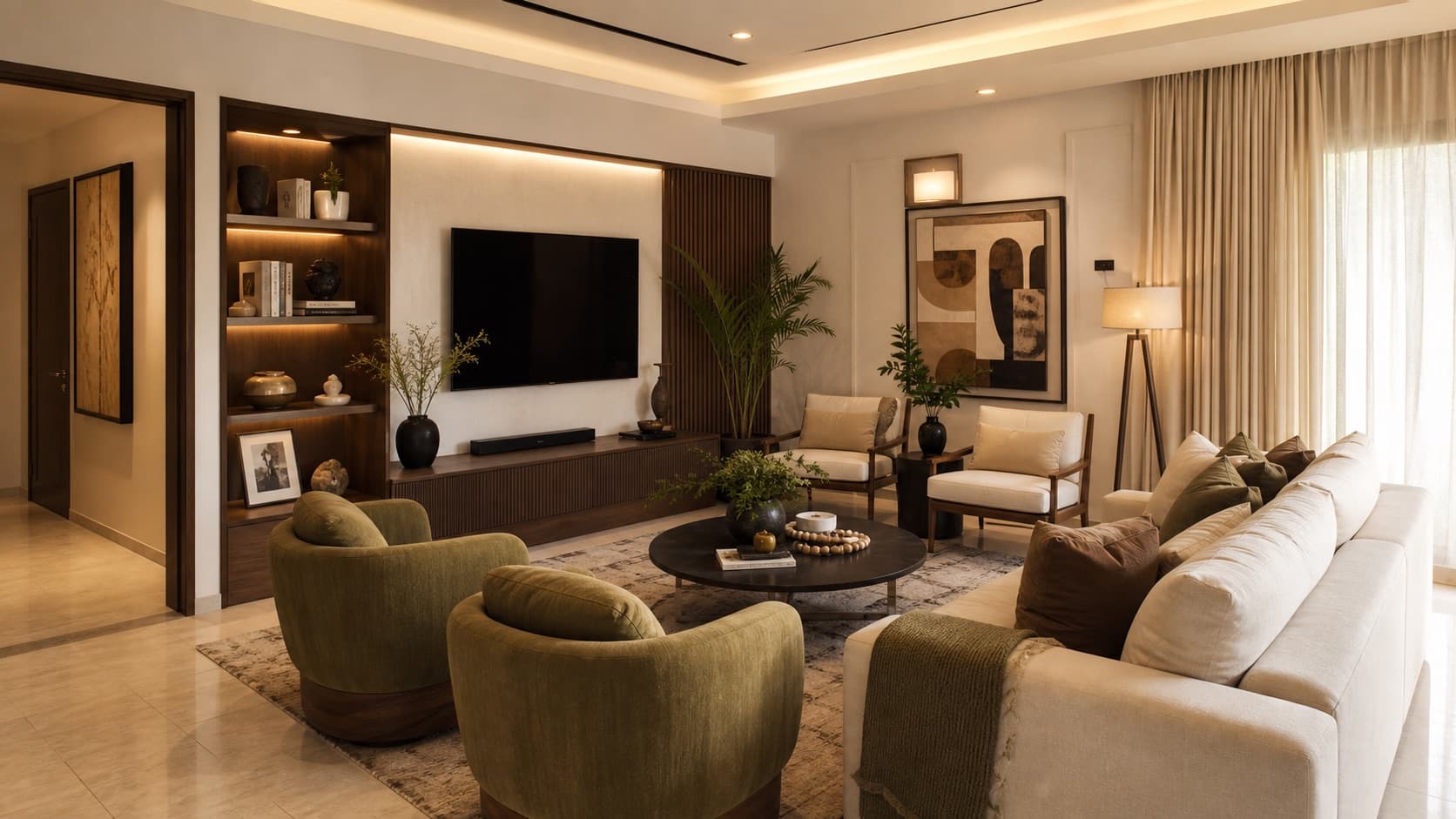
A beautiful living room starts with how people move through it. Before choosing a sofa or a centre table, note the doors, windows, TV wall, natural light, and the path people use when entering the space. The best layouts feel calm because nothing important is fighting for attention.
Start with the main seating position, then build around it. In most homes, the sofa should face the strongest focal point: a media wall, a view, a feature wall, or a conversational seating pair. Leave enough room around the centre table so the room is easy to use, especially when family or guests are moving through.
Lighting should work in layers. Ceiling lights help with general brightness, but table lamps, wall lights, and warm accent lighting make the room feel finished in the evening. A living room that relies on one harsh light source often looks flat, even when the furniture is expensive.
Storage is where many living rooms succeed or fail. Closed storage keeps daily clutter under control, while open shelves should be styled with intention. Mix books, sculptural objects, framed pieces, and negative space so the display feels collected rather than crowded.
Finally, choose fewer pieces with stronger purpose. A functional living room does not need to feel empty; it needs to feel edited. When every piece has a reason to be there, the room becomes easier to maintain and more enjoyable to live in.